Why Food Safety Basics Matter More Than Most People Think
I got food poisoning from a chicken sandwich once. Not a sketchy food truck — a sit-down restaurant with cloth napkins and a wine list. Three days in bed. And I remember thinking, someone in that kitchen skipped something basic.
That’s the thing about food safety basics that most people underestimate: the stakes aren’t abstract. We’re not talking about edge cases or rare disasters. The CDC estimates roughly 48 million Americans deal with foodborne illness every single year — that’s about 1 in 6 people. Most of those cases trace back to completely preventable mistakes, the kind of stuff that takes 30 seconds to avoid if you just know what to look for.
Honestly, the problem isn’t ignorance exactly. It’s false confidence. People assume their kitchen is fine because nothing bad has happened yet. But cross-contamination doesn’t announce itself. Neither does a temperature danger zone violation. You can’t see Salmonella on a cutting board — which is exactly why a Rapid Test Kit exists, and why more home cooks are starting to treat their kitchens with the same skepticism a food inspector would.
And the habits you build early matter enormously. I’ve watched friends obsess over Genuine supplements and clean eating routines, spending real money on wellness, then leave raw chicken juice sitting on a counter for 40 minutes. The disconnect is wild. You can optimize every other part of your diet and still undo it with one sloppy prep session.
Some of the best hygiene habits are almost embarrassingly simple:
- Wash hands for at least 20 seconds before and after handling raw proteins
- Keep raw meat on the lowest refrigerator shelf (below everything else)
- Use separate cutting boards — one for produce, one for meat, full stop
- Replace sponges and single-use items like Disposable Facial Towels regularly instead of re-using anything that traps bacteria
- Check internal temperatures with an actual thermometer, not a guess
Small stuff. Unglamorous stuff. But this is where food safety basics actually live — not in a textbook, in your kitchen, right now.
The Right Way To Store Food at Home (And the Mistakes That Get People Sick)
My fridge used to be a disaster. I’m talking raw chicken sitting on the middle shelf, leftovers in unlabeled containers that I’d optimistically sniff-test three days later. I made this mistake for years — and honestly, most people I know do the same thing without realizing how close they’re skating to a genuinely bad outcome.
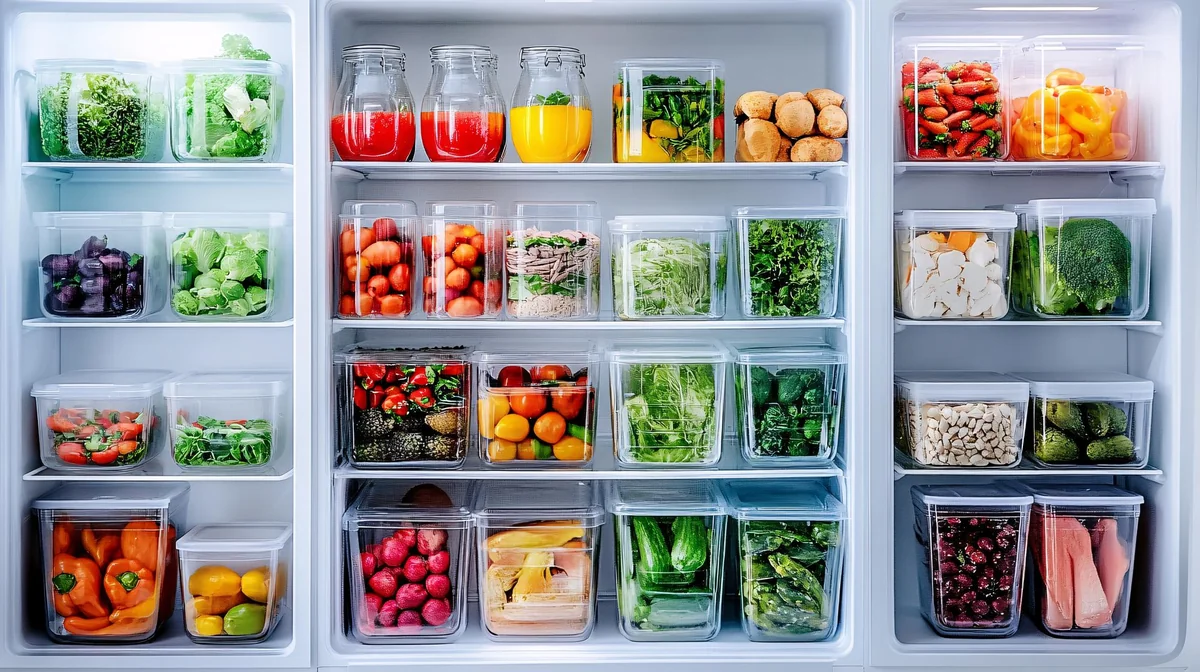
Storage is where food safety basics quietly fall apart for most households. Not because people don’t care. Because nobody ever spelled out the actual rules in plain language.
So here’s the core of it: temperature is everything. The “danger zone” — 40°F to 140°F — is where bacteria multiply fastest, and leftovers sitting on your counter for two hours have already entered it. Two hours. That’s not a lot of time, especially if you got distracted after dinner (which, same).
A few storage rules that are genuinely worth committing to memory:
- Cool hot food quickly before refrigerating — don’t put a steaming pot straight in the fridge, but don’t leave it on the counter for an hour either. Split it into shallow containers to speed cooling.
- Label everything with a date. Sounds fussy. Saves you from the sniff-test gamble.
- Cooked proteins last 3-4 days in the fridge, not a week — no matter how good they smell.
- Frozen food isn’t forever. Quality and safety both degrade past the 3-month mark for most meats.
- If you’re ever genuinely unsure about something — especially seafood or poultry — a Rapid Test Kit designed for home use can flag bacterial contamination before you serve it to anyone.
And the fridge organization thing from the previous section? It connects directly here. Raw meat on the bottom shelf isn’t just a hygiene tip — it’s a contamination firewall. Drips happen. Physics doesn’t care about your meal prep intentions.
One thing people never think about: the door of your fridge runs warmer than the interior shelves. Eggs and dairy stored there are sitting in suboptimal conditions — not ideal for food safety basics, even if that’s where the little egg tray is molded in. (Manufacturers do that. It’s annoying.)
None of this requires a Jewelry Showcase of specialty gadgets or genuine supplements-level investment in premium products. A decent fridge thermometer — you can grab one for under $12 — tells you if your appliance is actually holding 37°F the way it should. Most aren’t calibrated as precisely as you’d think, similar to how automotive cnc machining tolerances sound tight until you’re actually measuring them. Small variance, real consequences. And if you’ve been using disposable facial towels to wipe down surfaces, keep doing it — single-use means no bacterial transfer, which is the whole point. An nd1000 filter doesn’t belong in your kitchen, but a clean surface absolutely does.
How To Handle Raw Meat, Poultry, and Seafood Without Cross-Contaminating Everything
I once ruined an entire cutting board — and honestly probably made my family sick — because I sliced raw chicken on it, wiped it down with a damp cloth, and then immediately used it for salad greens. That’s the kind of mistake that doesn’t announce itself until someone’s doubled over at 2am. Raw meat, poultry, and seafood are in a completely different category from everything else you prep, and treating them casually is where most food safety basics actually break down.

Separate boards. Non-negotiable. Color-coded ones exist for a reason — red for raw meat, green for produce — and you can grab a decent set for under $20. But even if you’re working with one board, the rule is simple: raw protein goes last, or gets its own dedicated surface every single time. No exceptions for “just a quick trim.”
Juices are the real villain here. Raw chicken drip on a countertop, a quick wipe with a reusable cloth, and now everything that touches that surface is compromised. Disposable facial towels — the kind you’d normally use for skincare — actually work brilliantly for this. Single-use, no cross-transfer, done. It sounds fussy until you realize a reusable sponge is basically a bacterial hotel.
And the fridge situation matters too. Raw meat always goes on the bottom shelf — always — so nothing drips onto produce or leftovers below. Think of it like a Jewelry Showcase where every item has its designated spot, except the stakes are slightly higher than scratching a necklace. Seafood especially needs to stay ice-cold; if you’re not cooking it same-day, it honestly shouldn’t be sitting in your fridge at all.
Handwashing after handling raw protein sounds obvious. It isn’t practiced nearly enough. Twenty seconds, soap, warm water — not a rinse-and-go situation. If you’re ever genuinely unsure whether a surface is clean (maybe you’re prepping for a crowd, things got chaotic), a Rapid Test Kit for surface bacteria is a thing that exists and costs about $15. Not something most home cooks own, but worth knowing about.
The precision required here isn’t unlike automotive cnc machining tolerances — tiny lapses, compounding consequences. Keep things separated. Keep surfaces clean. That’s most of it.
Safe Food Temperatures: The Numbers You Actually Need To Know
I burned through an entire Thanksgiving dinner once because I trusted color over temperature. The turkey looked perfect — golden, juicy, gorgeous — and I pulled it at what I figured was “done.” Three family members felt awful by Sunday morning. That was the last time I eyeballed meat instead of using a thermometer.
Here’s the thing about food safety basics that nobody frames correctly: the danger zone isn’t a vague concept. It’s 40°F to 140°F, and bacteria multiply so fast inside that range that two hours is genuinely the ceiling — not a guideline, not a rough estimate. Two hours. After that, you’re rolling dice.
The numbers that actually matter, laid out plainly:
| Food Type | Safe Internal Temp | Notes |
|---|---|---|
| Whole poultry | 165°F | Check thickest part, not near bone |
| Ground beef / pork | 160°F | Color means nothing here |
| Whole cuts of beef / lamb | 145°F + 3 min rest | Rest time matters as much as temp |
| Fish and shellfish | 145°F | Flesh should flake, not translate |
| Leftovers / casseroles | 165°F | Reheat fully, every time |
| Pork (whole cuts) | 145°F + 3 min rest | Updated USDA guidance, not old 160°F |
And yes, a $15 instant-read thermometer — a Thermapen One runs about $99, but the $15 drugstore version works fine for home cooking — removes every single guess from this equation. Worth it. Completely worth it.
Refrigeration gets less attention than it deserves here. Your fridge should sit at or below 40°F. Not 42°F. Not “cold enough.” Forty degrees. (Most people have never actually checked theirs — grab a fridge thermometer, they’re cheap, this matters more than you’d think.)
So the pattern in food safety basics keeps repeating itself: precision over intuition. Whether you’re calibrating an nd1000 filter for photography or chilling a protein for dinner, the margin for error is tighter than it feels. Trust the numbers, not your gut — ironically enough.
Conclusion
Honestly, food safety basics come down to two things you can act on today: get a thermometer and actually check your fridge temperature. That’s it. Everything else — the cross-contamination stuff, the two-hour rule, the reheating temps — it all gets easier once those two habits are locked in.
Most foodborne illness isn’t bad luck. It’s a skipped step.
So next time you’re pulling something out of the oven or sliding leftovers into the fridge, take the extra thirty seconds. The numbers exist for a reason — and your gut (literally) will thank you.
Frequently Asked Questions
Q: What are the most important Food Safety Basics everyone should know?
A: Honestly, the four you can’t skip are: clean, separate, cook, and chill — and if you forget everything else, at least own a meat thermometer. Cross-contamination and improper storage temperatures cause far more foodborne illness than people realize. Most of it is preventable with about thirty extra seconds of attention.
Q: How long can cooked food sit out before it’s unsafe to eat?
A: Two hours at room temperature is your hard cutoff — drop that to one hour if your kitchen is above 90°F (like during summer cookouts). After that window, bacteria can double in count every 20 minutes, which is a lot faster than most people expect. When in doubt, throw it out. That leftover pasta isn’t worth the next three days of your life.
Q: What temperature should my fridge actually be set to?
A: 40°F (4°C) or below — that’s the number. A lot of fridges run warmer than their dial suggests, so pick up a standalone fridge thermometer (the Taylor 5924 is like $8 and totally reliable) and actually check it. Food Safety Basics starts here, before anything hits the stove.
Q: How do I avoid cross-contamination when prepping raw meat?
A: Use a dedicated cutting board for raw meat and never let it touch produce or cooked food — color-coded boards make this brainlessly easy. Wash your hands for at least 20 seconds after handling raw chicken, beef, or fish, not just a quick rinse. And wipe down your counter with a disinfectant solution, not just a damp cloth, because that just moves bacteria around.
Q: Why does Food Safety Basics always mention 165°F for poultry?
A: Because that’s the internal temperature at which Salmonella and Campylobacter — the two biggest culprits in poultry-related illness — are reliably killed. The color of the meat tells you nothing useful; I’ve pulled pink chicken that read 168°F internally and fully cooked-looking chicken that was only at 155°F. The thermometer is the only thing you can trust here.
Q: Can I refreeze meat that’s already been thawed?
A: If you thawed it in the fridge (not on the counter), then yes — you can refreeze it, though the texture will take a hit each time. If it was thawed in cold water or the microwave, cook it first before refreezing. The Food Safety Basics rule to remember: thawing on the counter is never the right move, no matter how much of a rush you’re in.
Q: How long do leftovers actually last in the fridge?
A: Most cooked leftovers are good for 3 to 4 days — and that’s assuming your fridge is at the right temperature to begin with. Soups and stews tend to hold up well; anything with mayo or dairy is more like 2 days before you’re gambling. Label your containers with the date — it takes two seconds and saves you the “does this smell okay?” guessing game every single time.
Q: Is washing raw chicken actually a Food Safety Basics mistake?
A: It is, and the USDA has been saying so for years — washing raw chicken doesn’t remove bacteria, it just splashes it across your sink, faucet, and nearby surfaces in a fine mist you can’t see. The only thing that kills pathogens on poultry is heat. Skip the rinse, cook it to 165°F internal, and you’re done.