How Household Cleaning Chemistry Actually Works (And Why It Matters for Your Health)
Most people treat cleaning products like magic potions — spray, wipe, done. But what’s actually happening at the molecular level is a lot more interesting than the label suggests, and honestly, understanding it changes how you shop and how safe your home actually is.
Household cleaning science comes down to a few core chemical reactions. Surfactants — the active ingredient in almost every soap and detergent — have a split personality. One end of the molecule is hydrophilic (water-loving), the other is hydrophobic (oil-loving). So when you scrub a greasy pan, the hydrophobic tails latch onto the grease while the hydrophilic heads stay bonded to the water. The whole mess rinses away together. Simple in theory. Genuinely elegant in practice.
Then there’s the acid-versus-base dynamic, which is where things get health-relevant fast. Acidic cleaners — think white vinegar or products with a pH around 2-3, like some lime scale removers — dissolve mineral deposits and rust. Alkaline cleaners, which sit at the other end of the scale (pH 11-13, like oven cleaners and drain openers), break down fats and proteins. Mixing the two doesn’t double your cleaning power. It neutralizes both. You’ve just wasted product and potentially created fumes.
Speaking of fumes. This is the part household cleaning science tutorials gloss over.
Chlorine bleach (sodium hypochlorite) mixed with ammonia — found in some glass cleaners — produces chloramine gas. Not great for your lungs. Not something you’ll notice immediately, which makes it worse. And bleach mixed with acidic cleaners like vinegar? That releases chlorine gas. These aren’t edge-case chemistry experiments; they’re accidents that happen in kitchens every week because the labels don’t scream loudly enough about it.
The practical takeaway here isn’t to avoid cleaning products. It’s to read the active ingredients, not just the brand name. A pH-neutral cleaner (around 7) is genuinely safer for daily use on most surfaces — and your skin — than rotating between heavy-duty alkaline and acidic products without thinking about what’s left on the counter from the last round.
- Surfactants lift grease by bridging oil and water molecules
- Acidic cleaners target mineral and rust buildup (pH 2-5)
- Alkaline cleaners break down fats and organic matter (pH 10-13)
- Never mix bleach with ammonia or acidic cleaners — the byproducts are toxic
- pH-neutral products (pH 6-8) are lower-risk for daily household use
The Ingredients in Common Cleaning Products That Raise Real Safety Concerns
Most labels bury the problematic stuff in fine print. And not accidentally — the regulatory minimum for disclosure is genuinely low, which means a product can legally list “fragrance” as a single ingredient when that word is masking a cocktail of dozens of synthetic compounds, some of which are known irritants or sensitizers.
So let’s talk about the actual offenders. Chlorine bleach (sodium hypochlorite, typically sold at 3–8% concentration in household products) is effective but volatile — it off-gasses chlorine fumes at room temperature, and those fumes are hard on respiratory tissue even at low concentrations. People with asthma or chemical sensitivities feel this fast. Quaternary ammonium compounds, or “quats,” show up in most disinfecting sprays and wipes — including the ones marketed as “gentle” — and there’s a growing body of research linking repeated quat exposure to respiratory issues and potential antimicrobial resistance. Not a fringe concern anymore.
Glycol ethers are another one worth knowing. Used as solvents in many all-purpose sprays and glass cleaners (2-butoxyethanol is the most common), they absorb through skin more efficiently than most people realize — which matters when you’re wiping down a kitchen counter with your bare hands, no gloves, for the fifth time that week.
Artificial fragrances. Genuinely the wild card of household cleaning science.
The word “fragrance” or “parfum” on a label is essentially a legal black box — manufacturers aren’t required to disclose what’s actually in it, and some formulations contain phthalates, which are endocrine disruptors. The EPA has flagged certain phthalates for concern. That’s not alarmist; that’s just the regulatory record.
| Ingredient | Commonly Found In | Primary Concern |
|---|---|---|
| Sodium hypochlorite | Bleach, disinfectants | Respiratory irritant; toxic when mixed |
| Quaternary ammonium compounds | Disinfecting wipes, sprays | Respiratory sensitization, resistance risk |
| 2-Butoxyethanol | Glass cleaners, all-purpose sprays | Skin absorption; organ toxicity at high exposure |
| Synthetic fragrance/parfum | Most scented products | Undisclosed phthalates; irritant potential |
None of this means your bathroom cleaner is going to hospitalise you. But context matters — ventilation, frequency of use, whether you’re wearing gloves — and most of us aren’t thinking about any of that when we’re scrubbing a tub on a Sunday morning with the window closed.
Reading Cleaning Product Labels Like Someone Who Understands the Science
Labels on cleaning products are designed to satisfy regulators, not inform you. That’s a blunt way to put it, but it’s true — the disclosure requirements in most markets are weaker than most people assume, and “cleaning product” as a category sits in a regulatory grey zone that lets manufacturers hide a lot behind the word “fragrance” or a vague ingredient list buried in 6-point font on the back panel.
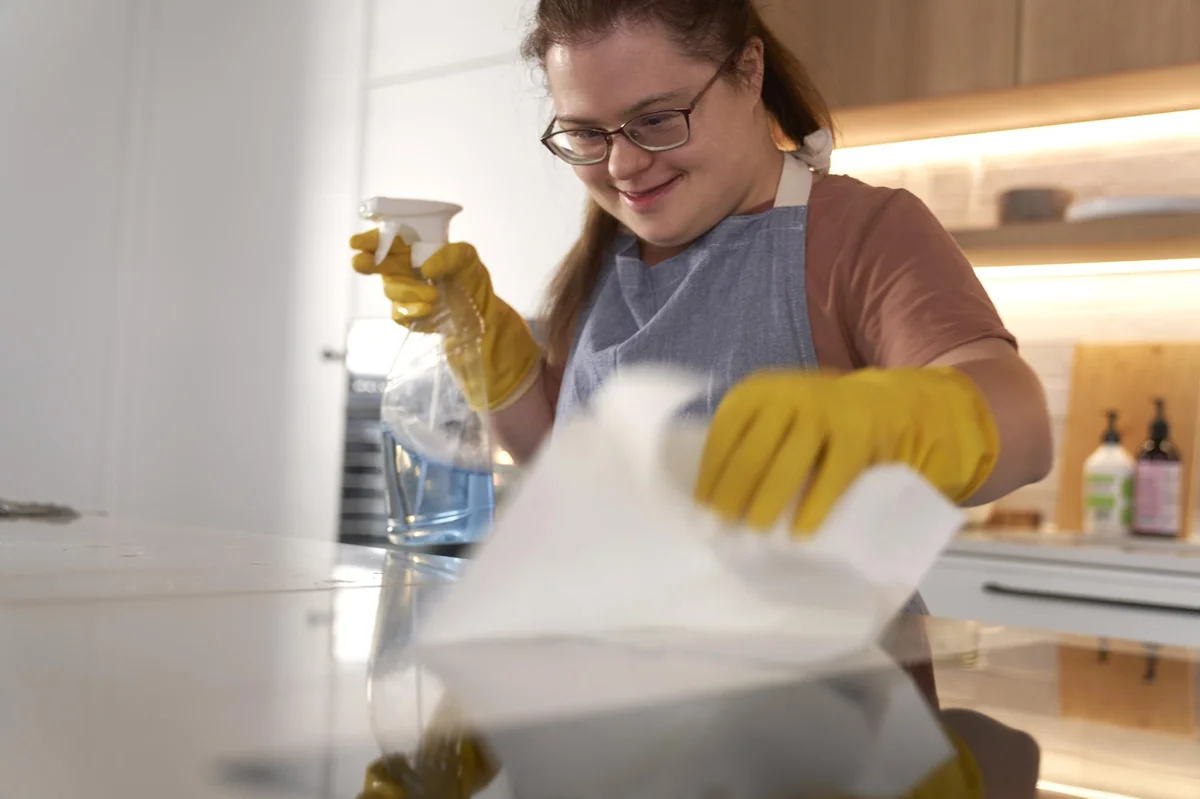
So here’s how to actually read one. The first thing to look for is the signal word. “Danger” means the product can cause severe injury — eye damage, chemical burns, serious respiratory harm — at relatively low exposure. “Warning” sits a step below that. “Caution” is the mildest tier. Most people skim right past these words because they’re printed small and surrounded by marketing copy, but in the context of household cleaning science, that signal word is doing real regulatory work.
Active versus inactive ingredients. This distinction matters enormously.
Active ingredients are the ones doing the disinfecting or sanitizing — they have to be listed by law if the product makes antimicrobial claims, which is why you’ll see sodium hypochlorite at 2.4% on a bleach-based cleaner. Inactive ingredients — surfactants, solvents, stabilizers, fragrance — are often just listed as a category or not at all. That’s where 2-butoxyethanol and synthetic fragrance compounds tend to hide, and as the previous section covered, those aren’t nothing.
- Signal word (Danger / Warning / Caution) — tells you the acute hazard tier
- Active ingredient percentage — only required if disinfecting claims are made
- First aid instructions — a fast proxy for what the product can actually do to tissue
- Keep out of reach of children — legally mandated, but also tells you something about the formulation
- EPA registration number (in the US) — confirms independent efficacy testing has occurred
And honestly, the first aid section is underrated as a reading tool. If the label says “if inhaled, move to fresh air and call poison control” — you probably want a window open. Not panic-inducing. Just useful information that was always there.
Safer Cleaning Product Choices Based on What the Chemistry Actually Tells You
So here’s where the chemistry actually earns its keep — not in a lab, but in the aisle of a grocery store where you’re squinting at two bottles that cost $3 apart and wondering if it matters. It does. Sometimes. And the way to figure out which situations call for what comes down to matching the product’s chemistry to the actual job.
Alkaline cleaners — your baking soda pastes, ammonia-based sprays, most degreasers — break down fatty acids and oils. That’s their whole thing. So if you’re dealing with grease on a stovetop or body oils on a pillowcase, alkaline is doing real work. Acidic cleaners (white vinegar, citric acid blends, some bathroom descalers) go after mineral deposits and soap scum — the chalky white buildup that alkaline products will basically ignore. Using the wrong pH for the wrong job isn’t dangerous, usually. Just pointless.
Pointless cleaning is a real problem, actually.
Where household cleaning science gets genuinely useful is in understanding why you don’t always need a disinfectant. Surfactant-based cleaners — the kind that just lift and suspend dirt so you can wipe it away — are appropriate for most everyday surface cleaning. Disinfectants with active biocides like quaternary ammonium compounds or hydrogen peroxide are warranted when you’ve had raw meat contact, someone’s been sick, or you’re dealing with a surface that’s genuinely high-risk. Spraying a registered disinfectant on a dusty bookshelf is overkill and, over time, contributes to the kind of antimicrobial resistance researchers have flagged as a low-grade concern worth taking seriously.
A rough decision framework that actually holds up:
- Grease, oils, food residue → alkaline or surfactant-based cleaner
- Mineral scale, rust stains, hard water deposits → acidic cleaner
- General dust and light dirt → plain surfactant, no biocide needed
- Confirmed pathogen risk or post-illness surfaces → EPA-registered disinfectant, used as directed
- Mold on porous surfaces → often a structural problem, not a spray problem
And don’t mix categories trying to cover all bases at once — combining an alkaline and an acidic cleaner just neutralizes both (you’ve made water, essentially, and spent eight dollars doing it).
Conclusion
Household cleaning science basically comes down to this: match the cleaner to the soil, not to your anxiety level about germs.
Most surfaces in a typical home don’t need disinfecting — they need the right chemistry for the mess that’s actually there. Grease wants alkaline. Scale wants acid. Mixing them doesn’t double your cleaning power; it cancels it out. And reaching for a registered disinfectant every time you wipe a counter isn’t safer — it’s just expensive and, at a population level, probably counterproductive.
Read the label, think about what you’re actually cleaning, and buy fewer products that do their specific job well rather than a cabinet full of stuff that sounds powerful.
Frequently Asked Questions
Q: What is household cleaning science, and why does it actually matter?
A: Household cleaning science is the study of how chemical agents interact with different types of soil, bacteria, and surfaces — grease, mineral scale, protein stains, and microbes all respond to completely different chemistry. It matters because most people are either under-cleaning (wrong product) or wasting money over-cleaning (using disinfectants on surfaces that just need degreasing). Getting this right means fewer products, better results, and a lot less label confusion.
Q: Why does mixing bleach and vinegar make things worse, not better?
A: Bleach is alkaline; vinegar is acidic. Combine them and they neutralize each other, producing chlorine gas in the process — which is genuinely hazardous in an enclosed space like a bathroom. You don’t get “double the clean.” You get a weaker solution and a reason to open a window fast.
Q: How long does a disinfectant actually need to sit on a surface to work?
A: Most EPA-registered disinfectants require a contact time (sometimes called “dwell time”) of anywhere from 30 seconds to 10 minutes — and if you wipe it off before that clock runs out, you haven’t disinfected anything. Lysol Disinfecting Spray, for example, lists a 2-minute contact time for killing most bacteria. Read the label; that number is non-negotiable.
Q: Can I use one all-purpose cleaner for everything, or is that a myth?
A: Mostly a myth, honestly. All-purpose cleaners are formulated for light, water-soluble soils — they’re decent on countertops after cooking but genuinely useless on heavy limescale or baked-on grease. The household cleaning science here is simple: alkaline cleaners cut grease, acidic cleaners dissolve mineral deposits, and no single pH can do both well at the same time.
Q: How much of a difference does water temperature make when cleaning?
A: A significant one. Heat increases the kinetic energy of molecules, which speeds up the chemical reactions between your cleaner and the soil — roughly, every 10°C rise in temperature can double the reaction rate. Hot water also lowers the surface tension of water, helping it penetrate greasy residue faster. For most household tasks, 50–60°C (120–140°F) hits the sweet spot without damaging surfaces.
Q: Is it worth buying “antibacterial” dish soap over regular dish soap?
A: No — and the FDA actually agrees. Antibacterial soaps containing triclosan were banned from consumer hand soaps in 2016 over concerns about antibiotic resistance, and the evidence that they outperform regular soap is thin at best. Standard dish soap removes bacteria through surfactant action (it lifts and rinses them away), which is effective enough for a kitchen sink. Save the few extra dollars.
Q: Why does baking soda and vinegar do almost nothing despite looking dramatic?
A: The fizzing looks satisfying — it’s just an acid-base reaction producing carbon dioxide gas, and that reaction consumes both ingredients rapidly, leaving you with mostly water and sodium acetate. From a household cleaning science standpoint, you’ve neutralized the one useful property each ingredient had: the mild abrasiveness of the baking soda and the acidity of the vinegar. Use them separately, not together.
Q: How do I know if a surface actually needs disinfecting or just cleaning?
A: The CDC’s framework is useful here: cleaning removes dirt and reduces microbial load, while disinfecting kills pathogens on an already-clean surface. High-touch surfaces after illness (toilet handles, door knobs, light switches) warrant disinfection. A kitchen counter after chopping vegetables? That needs cleaning — and understanding that distinction is really what household cleaning science is about at a practical level.