Automotive suspension systems operate under constant stress, requiring components that can withstand friction, vibration, and heavy load conditions. Among these components, shock absorbers play a crucial role in ensuring vehicle stability, comfort, and safety. To maintain their performance, proper lubrication is essential, and this is where lithium grease becomes an important consideration in automotive engineering.
In this article, we will explore whether lithium grease is suitable for shock absorbers or not. We will also discuss how Tech Master Auto Parts and Nishimoto Petroleum support performance and durability in this automotive segment.
Without any further delay, let’s begin with our article!
What Role Does Lithium Grease Play in Automotive Shock Absorber Performance?
Lithium grease plays an important role in automotive shock absorber performance by reducing friction between moving components and ensuring smooth mechanical operation under continuous stress. Shock absorbers are constantly exposed to vibration, impact loads, and temperature variations, which can lead to wear and reduced efficiency over time. A high-quality lithium grease helps form a protective lubricating layer that minimizes metal-to-metal contact, thereby improving component durability and operational stability.
In addition, lithium grease provides excellent resistance to water, oxidation, and high temperatures, which makes it suitable for demanding automotive environments. It helps maintain consistent damping performance by ensuring that internal moving parts function smoothly without sticking or excessive resistance. For automotive shock absorber manufacturers like Tech Master Auto Parts, proper lubrication using materials such as lithium grease is essential for achieving long-lasting performance, safety, and ride comfort.
Why Is Lithium Grease Widely Used in Automotive Component Manufacturing?
Lithium grease is widely used in automotive component manufacturing because of its versatility, stability, and cost-effectiveness. It can perform reliably under a broad range of operating conditions, making it suitable for applications such as bearings, joints, suspension systems, and general chassis components.
One of the main reasons for its popularity is its excellent thermal stability. Lithium grease maintains its consistency even under high temperatures, which is critical in automotive systems that experience continuous friction and heat generation. It also offers strong adhesion properties, allowing it to stay in place for longer periods and reduce the need for frequent reapplication.
How Do Automotive Shock Absorber Manufacturers Evaluate Lubrication Requirements?
Automotive shock absorber manufacturers evaluate lubrication requirements based on operating conditions, material compatibility, and long-term performance expectations. Since shock absorbers operate under continuous motion, vibration, and varying load pressures, lubrication must minimize friction while maintaining consistent damping behavior throughout the component’s lifespan.
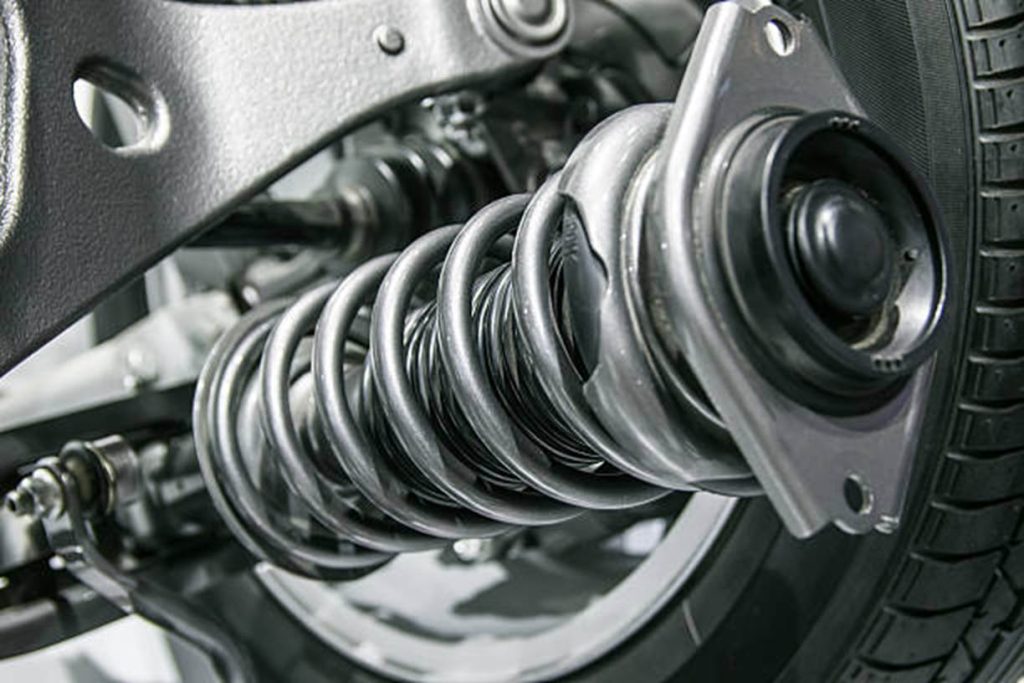
Manufacturers assess key factors such as temperature resistance, load-bearing capacity, water resistance, and oxidation stability when selecting lubricants like lithium grease. They also conduct durability testing under simulated road conditions to observe wear patterns, leakage risk, and performance degradation over time. Compatibility with rubber seals and internal metallic components is another critical consideration, as improper lubrication can lead to seal damage or reduced shock absorber efficiency.
For companies like Tech Master Auto Parts, this evaluation process ensures that every lubricant used contributes to stable performance, reduced maintenance needs, and extended service life of the shock absorber system.
How Does Tech Master Auto Parts Ensure Reliable Shock Absorber Performance and Durability?
Tech Master Auto Parts ensures reliable shock absorber performance and durability through precision engineering, material optimization, and strict quality control processes. Each shock absorber is designed to withstand continuous stress from road impact, vibration, and load variation while maintaining consistent damping performance.
The company integrates high-quality internal components and carefully selected lubrication solutions to reduce friction and prevent premature wear. Rigorous testing procedures, including fatigue testing and environmental simulation, are used to verify product stability under extreme conditions such as high heat, moisture, and heavy usage cycles.
Is Lithium Grease the Ideal Choice for Every Shock Absorber Application?
Lithium grease is not always the ideal choice for every shock absorber application, even though it is widely used in automotive systems. Its performance depends heavily on the design of the shock absorber, operating environment, and load conditions. In many conventional suspension systems, lithium grease performs well due to its strong adhesion, thermal stability, and resistance to water and oxidation.
However, in high-performance or specialized shock absorbers, alternative lubricants such as synthetic greases or advanced polymer-based formulations may be required to meet stricter performance demands.
Another important factor is system compatibility. Some modern shock absorber designs use sealed or semi-sealed structures where lubrication is pre-engineered and not frequently replaced. In such cases, lubricant selection is determined during manufacturing rather than maintenance. Therefore, while lithium grease is a reliable and cost-effective option for many applications, it is not universally suitable for all shock absorber systems.
How Does Nishimoto Petroleum Support Industrial Lubrication Needs with High-Quality Lithium Grease?
Nishimoto Petroleum supports industrial lubrication needs by supplying high-quality lithium grease designed for demanding automotive and mechanical applications. The company focuses on producing formulations that offer stable performance under high pressure, temperature fluctuations, and continuous mechanical movement, making them suitable for components like bearings, joints, and suspension systems.
Their lithium grease products are engineered to provide strong film strength, corrosion resistance, and long-lasting lubrication efficiency. This helps reduce wear and extend the service life of critical automotive parts, including shock absorbers. In addition, Nishimoto Petroleum ensures consistent product quality through controlled manufacturing processes and industrial-grade testing standards.
By delivering reliable lubrication solutions to manufacturers such as Tech Master Auto Parts and other automotive suppliers, Nishimoto Petroleum plays an important role in supporting performance stability, maintenance efficiency, and long-term durability across the automotive industry.
Conclusion:
Lithium grease plays an important role in enhancing the performance and durability of automotive shock absorbers by reducing friction, resisting wear, and ensuring stable operation under demanding conditions. However, its suitability depends on specific application requirements, as not all shock absorber systems are designed to use the same type of lubrication. Manufacturers like Tech Master Auto Parts carefully evaluate lubrication needs to ensure long-lasting performance and safety, while suppliers such as Nishimoto Petroleum provide high-quality lithium grease solutions for industrial and automotive use. Together, they contribute to improved reliability, efficiency, and overall performance in modern automotive suspension systems.