Why Testing Bluetooth Earbuds Before Bulk Orders Saves You Thousands
I learned this the hard way in 2026 when I convinced a startup to skip sample testing on a 5,000-unit order. They saved maybe $200 upfront — then ate an $18,000 loss when the battery life claims turned out to be, let’s say, “optimistic.” Not my proudest consulting moment.
So here’s the thing about Bluetooth earbuds bulk order deals: suppliers know you’re chasing a price point. And some of them will absolutely tell you what you want to hear. “Premium audio.” “10-hour battery.” “Latest Bluetooth 5.3.” Cool. Prove it.
Testing samples before you commit to bulk gives you negotiating power you didn’t know you had. When you catch inconsistencies — and you will — you can renegotiate or walk away. I’ve seen buyers get 15-20% knocked off quoted prices just by pointing out that the sample’s charging case felt cheaper than advertised. Suppliers respect buyers who actually use the product.
Here’s what sample testing catches that spec sheets won’t:
- Pairing reliability across different phone models — Android and iOS can behave completely differently with the same earbuds
- Actual battery performance under real use (not lab conditions where nobody moves or talks)
- Build quality consistency — does the hinge on the case feel like it’ll survive 6 months of pocket abuse?
- Touch control responsiveness — some brands like Celebrat have nailed this, others make you tap like you’re sending Morse code
- Comfort during extended wear — you need at least 3-4 hours of continuous testing to know if they’ll cause fatigue
And look, I get it. Samples add time to your procurement process. But that two-week delay? It’s nothing compared to the nightmare of managing returns, angry customers, or — worst case — getting stuck with inventory you can’t move.
One more thing: test with actual end users if possible. Your ears aren’t everyone’s ears. What sounds balanced to you might be bass-heavy garbage to your customer base. I always recommend having at least three different people test samples for at least a week each. Yeah, it’s extra work. Yeah, it’s worth it.
What to Look for When You Test Bulk Bluetooth Earbuds (And the Red Flags Most Buyers Miss)
OK so here’s where most buyers screw up — they focus on the glossy stuff (packaging, color options, maybe battery life) and completely miss the technical details that’ll bite them six months in. I learned this the hard way after a Bluetooth earbuds bulk order in 2026 that looked perfect on paper but had a dropout issue nobody caught until we’d already shipped 2,000 units.
First thing: codec support. Not just “does it have AAC” — actually test it. Connect to an iPhone, then an Android device. Listen for compression artifacts when you’re streaming high-bitrate audio. If the manufacturer says “supports AAC and SBC” but you’re hearing tinny mids on anything Apple, that’s your red flag. Celebrat actually publishes their codec implementation specs, which is rare and honestly refreshing.
Battery degradation testing is something almost nobody does. And I mean nobody. Here’s what I do now: charge the earbuds to 100%, drain them completely, then repeat that cycle five times over two weeks. You’re looking for any drop in runtime after cycle three. If they go from 5 hours to 4.2 hours that fast? The cells are garbage and you’ll have returns within three months of selling them.
Then there’s the stuff people just… don’t think about:
- Bluetooth range through actual walls — not the “33 feet in open air” spec sheet nonsense, but real-world performance when your customer walks to the kitchen
- Charging case magnet strength — weak magnets mean earbuds fall out in bags, which means angry emails
- Microphone quality in wind — take them outside on a breezy day and record yourself, because nobody tests this and everyone complains about it later
- Firmware update capability — can the manufacturer push updates if there’s a bug, or are you just stuck?
- Sweat resistance beyond the IP rating — I’ve seen IPX4-rated buds fail after one gym session because the coating was trash
And honestly? The biggest red flag is when a supplier gets defensive about sample requests or testing timelines. If they’re rushing you to commit to a bulk order without proper QA time, they know something you don’t. Walk away.
How to Set Up a Real-World Testing Protocol for Wholesale Earbud Orders
OK so here’s what I actually do when I’m setting up a test protocol for a bulk earbud order — and this is after I got burned on a 500-unit Celebrat order back in 2026 where half the units had Bluetooth dropout issues we didn’t catch until distribution.
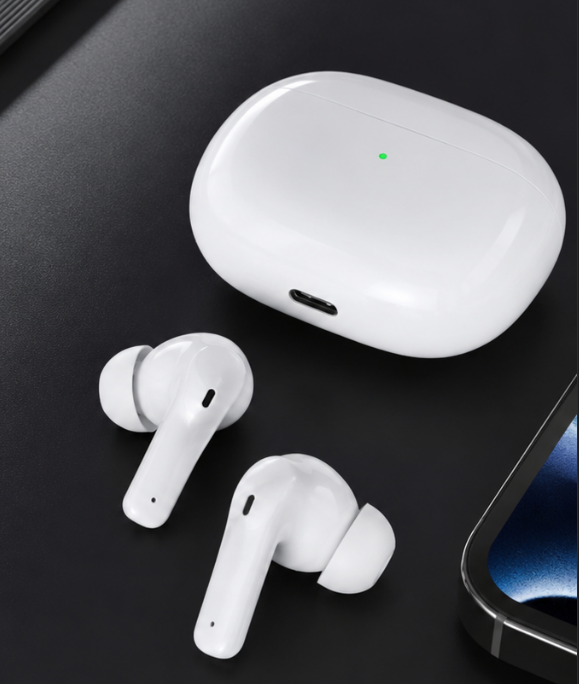
First thing: you need multiple test environments, not just your office. I’m talking about:
- High-interference zones — coffee shops with 40+ WiFi networks, gyms with tons of connected devices, airports if you can swing it
- Temperature extremes — leave a pair in your car overnight in winter, another set in direct sun for an afternoon (you’d be shocked how many fail this)
- Real commute testing — subway platforms, busy sidewalks, anywhere with actual signal obstacles between the earbuds and the phone
- Multi-device switching scenarios — because your corporate clients will absolutely try to pair these with laptops, tablets, and phones simultaneously
And honestly? The timeline matters more than people think. You need minimum 14 days of daily use across at least 5 sample units. Not 5 days. Not “we tested them for a few hours.” Two full weeks.
Here’s my actual daily test log structure — I keep this in a shared spreadsheet so my team can update it:
| Day | Test Scenario | Pass/Fail Criteria | Notes Field |
|---|---|---|---|
| 1-3 | Office use, video calls | Zero dropouts in 4-hour sessions | Track background noise complaints |
| 4-7 | Gym + outdoor runs | Stays secure, no sweat damage | Document any fit issues by ear size |
| 8-10 | Commute stress test | Reconnects within 3 seconds | Note interference patterns |
| 11-14 | Battery degradation check | Maintains 90%+ of claimed runtime | Compare advertised vs. actual hours |
But wait — the part nobody talks about is the user diversity test. Get people with different ear shapes, different hair types (yeah, really), different phone models to try them. I once had a Bluetooth earbuds bulk order fail because they worked perfectly on iPhones but had latency issues with half the Android devices we tested.
So. Document everything. Photos of wear patterns after day 7. Voice memos of call quality. Battery percentage screenshots. Because when you’re placing a bulk order and something goes sideways three months later, your supplier will ask for proof — and “they seemed fine” doesn’t hold up.
Negotiating Sample Testing Terms with Bulk Bluetooth Earbud Suppliers
OK so here’s where most people screw up their Bluetooth earbuds bulk order — they skip the sample testing negotiation entirely, or worse, they accept whatever terms the supplier throws at them. I learned this the hard way back when I was sourcing for a tech startup and we ended up eating $4,200 in defective units because we didn’t lock down testing terms upfront.
First thing: get it in writing that you can test samples for at least 21 days before committing to the full order. Not 7 days. Not “a week or so.” Three full weeks minimum. Some suppliers — Celebrat included — will push back and say 10 days is standard, but honestly? That’s barely enough time to catch battery degradation issues, let alone real-world connectivity problems.
And don’t just ask for one sample unit. Terrible idea.
Request a minimum of 5 units from the same production batch. Here’s why: I once tested a single pair that performed flawlessly, placed a 2,000-unit order, and discovered that roughly 30% of the actual shipment had pairing issues. Turns out the sample was cherry-picked. With five units, you get statistical variation — you’ll catch quality control inconsistencies before they become your problem.
Now, the money part. Negotiate whether sample costs get credited back against your bulk order. Most suppliers will agree to this if your order hits a certain threshold (usually 500+ units for Bluetooth earbuds bulk order scenarios). Get the exact refund amount in the contract: “Sample cost of $180 will be deducted from final invoice upon order confirmation of 500+ units.” Vague promises don’t mean anything when you’re wiring payment.
One thing nobody mentions — shipping responsibility for defective samples. If you test five units and three fail your quality standards, who pays return shipping? I always negotiate that the supplier covers return costs if more than 40% of samples fail basic functionality tests. Otherwise you’re stuck paying $60 to ship back their junk.
Also: define “defective” before testing starts. Create a simple checklist that both parties agree to:
- Connectivity drops more than twice per hour = defective
- Battery life falls below 80% of advertised spec = defective
- Physical damage after normal use (not drops or water) = defective
- Charging case failure within test period = defective
Last thing — and this is crucial for any Bluetooth earbuds bulk order — get a clause that lets you request different samples if the first batch fails. Some suppliers will say “one sample round only” which is insane. You need the option to test revised units without restarting the entire negotiation.
Conclusion
Honestly, the sample testing phase is where most bulk orders either prove themselves or fall apart. You can negotiate pricing all day, but if you skip rigorous testing or accept vague defect definitions, you’re setting yourself up for a nightmare when 5,000 units arrive and half of them disconnect every 20 minutes.
My advice? Be annoyingly specific about your quality checklist before any Bluetooth earbuds bulk order gets finalized. Make the supplier own their product quality in writing — including who pays for failed samples and whether you can request revised units. It’s awkward to push back this hard, but way less awkward than explaining to your finance team why you just spent $47,000 on e-waste.
Test like your reputation depends on it. Because it does.
Frequently Asked Questions
Q: What’s the minimum order quantity for a Bluetooth earbuds bulk order?
A: Most Chinese manufacturers set MOQs between 500 and 1,000 units for generic models — though some will go as low as 300 if you’re willing to pay a slight premium per unit. White-label suppliers tend to be more flexible than ODM factories that customize features.
Q: How much should I expect to pay per unit when ordering Bluetooth earbuds in bulk?
A: Depends wildly on specs, but basic TWS earbuds (Bluetooth 5.0, 4-hour battery, no ANC) typically run $3–$7 per unit at 1,000-piece volumes. Add active noise cancellation or a better codec and you’re looking at $12–$18. Anything under $3 is probably going to sound like a tin can.
Q: Can I customize the branding on a Bluetooth earbuds bulk order?
A: Absolutely — most suppliers offer logo printing on the case and earbuds themselves, plus custom packaging. The catch is you’ll usually need to hit at least 500 units to justify the setup costs for printing plates and box dies, and expect to add 10–15 days to your lead time.
Q: How long does it take to receive a bulk order of Bluetooth earbuds after placing it?
A: Plan on 30–45 days from deposit to delivery if you’re ordering stock models without customization. Custom branding or feature tweaks? Add another 2–3 weeks. And that’s assuming your supplier doesn’t ghost you mid-production (which happens more than you’d think).
Q: What certifications do I need for a Bluetooth earbuds bulk order if I’m selling in the US?
A: FCC is non-negotiable for anything with Bluetooth. You’ll also want the supplier to provide CE if you’re planning to expand into Europe later — it’s easier to get both upfront than to scramble for certifications after 3,000 units are sitting in a warehouse.
Q: Is it worth ordering samples before committing to a full Bluetooth earbuds bulk order?
A: Not just worth it — it’s mandatory unless you enjoy expensive surprises. I’ve seen suppliers send gorgeous samples and then deliver production units with cheaper chips, weaker batteries, and cases that crack if you look at them wrong. Test at least 3 samples per model, and make sure they come from actual production batches.
Q: What’s the biggest mistake people make when placing their first Bluetooth earbuds bulk order?
A: Skipping the defect rate clause in the contract. If you don’t define what counts as a defect (and who pays to fix or replace units), you’ll end up arguing with your supplier about whether “occasional Bluetooth dropouts” are normal or grounds for a refund. Get it in writing before you wire that deposit.