There’s a unique magic to a beautifully crafted perfume – a personal signature, an invisible accessory that speaks volumes. Yet, for many, the enchantment seems fleeting. You spray your favorite scent in the morning, only for it to vanish by midday, leaving you wondering if you’re doing something wrong. The good news is, you’re not alone, and more importantly, there’s a wealth of expert-backed strategies to ensure your fragrance lingers much longer. This comprehensive guide, compiled from the wisdom of leading perfumers, cosmetic chemists, and fragrance connoisseurs, reveals the ultimate perfume hacks to make your scent an enduring presence throughout your day.
The Science Behind Scent Longevity: Why Perfume Fades
Before diving into the hacks, understanding why fragrances fade is crucial. Perfumes are complex compositions of aromatic chemicals (fragrance notes) dissolved in alcohol. These notes evaporate at different rates:
- Top Notes: Lightest molecules, evaporating first (citrus, fresh herbs). Lasts 15 minutes to 2 hours.
- Middle Notes (Heart Notes): Appear as top notes fade (florals, spices). Lasts 3-5 hours.
- Base Notes: Heaviest molecules, forming the foundation (woods, resins, musks, vanilla). Lasts 5+ hours, often detectable for a full day.
The rapid evaporation of lighter notes, coupled with individual skin chemistry, environmental factors (heat, humidity), and the concentration of the fragrance (Eau de Cologne, Eau de Toilette, Eau de Parfum, Extrait de Parfum), all contribute to how long a scent will last on your skin. Leading olfactory scientists highlight that skin’s pH, oiliness, and hydration levels significantly impact how fragrance molecules interact and diffuse.
Masterful Application: The Core of Long-Lasting Perfume
The way you apply your fragrance is paramount. It’s not just about spraying; it’s about strategic placement and preparation.
Hydrate Your Canvas: The Power of Moisturized Skin
Fragrance experts unanimously agree: hydrated skin is the best canvas for perfume. Dry skin tends to absorb and dissipate fragrance more quickly, acting like a sponge that drinks up the oils. Moisturized skin, conversely, provides a slight barrier, allowing the fragrance molecules to cling to the surface and evaporate slowly.
- Expert Tip: Apply an unscented lotion or petroleum jelly (Vaseline) to your pulse points before spraying your perfume. This creates a hydrating base that “grips” the scent molecules, significantly extending wear time. A common piece of advice from top fragrance consultants is to apply your fragrance immediately after a shower, once your skin is clean and slightly damp, and then moisturized.
Strategic Pulse Points: Where to Spray Perfume
Pulse points are areas where blood vessels are close to the skin’s surface, generating warmth that helps to diffuse and amplify your scent.
- Key Pulse Points: Wrists, inner elbows, behind the ears, base of the throat/décolletage, and even behind the knees.
- Why these spots? The gentle warmth emanating from these areas acts as a natural diffuser, subtly releasing the fragrance throughout the day. However, renowned perfumer Sarah Jessica Parker once shared that she sprays a little perfume in her hair and on her clothes for added longevity, emphasizing the importance of diverse application points.
The ‘Walk-Through’ Myth vs. Direct Application
Many people believe in spraying perfume into the air and walking through the mist. While this creates a light, diffused aura, it’s largely wasteful and ineffective for longevity.
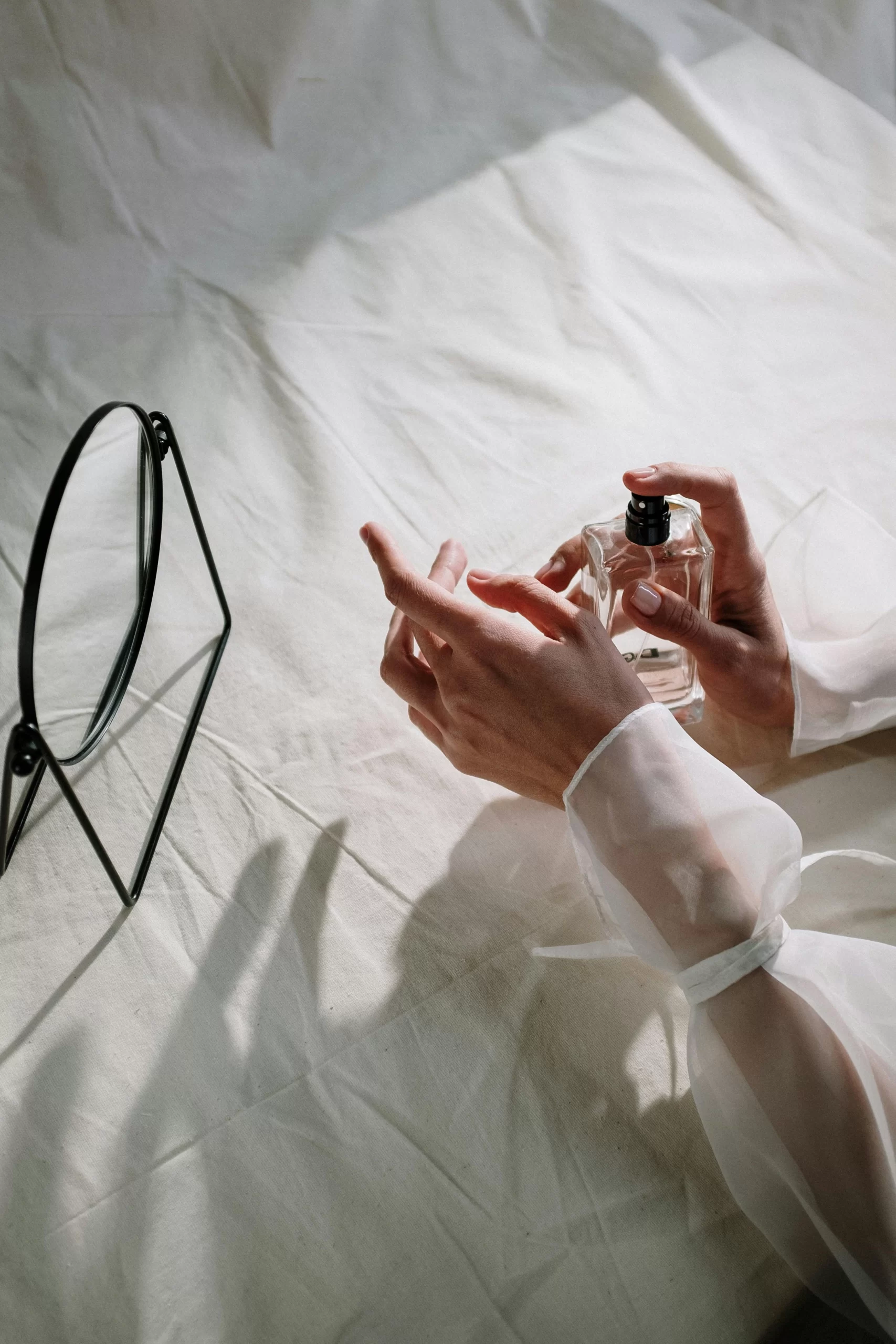
- Expert Advice: Industry insiders suggest applying directly to the skin from a distance of 5-7 inches. This ensures a concentrated application, allowing the fragrance to bond properly with your skin. The goal is to create a direct interaction with your skin’s natural oils and warmth, not just a fleeting cloud.
Don’t Rub, Just Spritz!
This is one of the most common mistakes people make. After spraying perfume on their wrists, they instinctively rub them together.
- Why it’s bad: Rubbing creates friction and heat, which breaks down the delicate fragrance molecules, particularly the volatile top notes. This can distort the scent and accelerate its evaporation, effectively shortening its lifespan on your skin. Instead, spray and let the fragrance air dry naturally.
Hair & Clothes: Extending the Sillage
While direct application on skin is primary, extending the reach of your scent to your hair and clothing can boost its sillage (the trail a fragrance leaves) and longevity.
- Hair: Hair is porous and holds scent beautifully. A light mist of perfume from a distance, or using a dedicated hair mist (which often contains conditioning agents and less alcohol), can carry your fragrance for hours. Be cautious with direct perfume sprays as the alcohol can be drying.
- Clothes: Fabrics, especially natural fibers like wool and cotton, can hold scent for days. Spraying a light mist onto your scarf, jacket lining, or collar can create a long-lasting aura. However, be mindful of potential staining on delicate fabrics or light-colored clothing due to the oil content in some perfumes. Always test on an inconspicuous area first.
Smart Storage & Maintenance: Preserving Your Perfume’s Potency
The way you store your perfume is as critical as how you apply it. Heat, light, and air exposure are the enemies of fragrance integrity.
The Enemy of Fragrance: Light, Heat, and Humidity
Fragrances are delicate chemical compositions that can degrade rapidly when exposed to environmental stressors.
- Light: Especially direct sunlight, can break down fragrance molecules, altering the scent and reducing its potency.
- Heat: Accelerates the chemical reactions that cause a perfume to “turn” or lose its original scent profile.
- Humidity: Can introduce moisture into the bottle, fostering bacterial growth and degrading the formula.
- Expert Tip: Store your perfume in a cool, dark place. The original box is an ideal protector, otherwise, a drawer or wardrobe away from direct heat and light sources is perfect. Some aficionados even recommend storing expensive or vintage fragrances in a refrigerator, particularly in hotter climates, but this is generally unnecessary for most modern perfumes.
Bathroom No-Go: Why the Vanity is Not Your Friend
The bathroom, while convenient, is perhaps the worst place to store your precious fragrances. The constant fluctuations in temperature and humidity from showers and baths create an unstable environment that can significantly shorten your perfume‘s shelf life. A bathroom vanity might seem like the perfect spot, but it’s a recipe for premature degradation.
Travel Safely: Protecting Your Precious Perfume
When traveling, your perfume faces new challenges. Extreme temperatures in car trunks or exposure to direct sunlight on a beach trip can quickly damage your fragrance.
- Travel Solution: Use smaller travel atomizers for your daily scent and keep your main bottle in a climate-controlled environment. If you must travel with the original bottle, ensure it’s well-protected in its box and away from direct heat sources.
Layering & Boosting: Elevating Your Perfume Experience
Beyond direct application, strategic layering and supplementary products can create a more immersive and enduring scent experience.
The Art of Scent Layering
Layering involves using multiple fragranced products from the same scent family or complementary notes to build a deeper, longer-lasting aroma.
- The Process: Start with a scented body wash, followed by a matching or complementary body lotion, and then apply your perfume. This creates a “scent foundation” that allows the top-layer fragrance to truly shine and last. For instance, if your perfume has prominent rose notes, using a rose-scented shower gel and body cream before spraying will intensify and prolong the rose essence.
- Beyond just the final fragrance, the quality of underlying product components and formulations plays a pivotal role in creating a cohesive and long-lasting scent profile. Many high-end brands carefully select their raw materials and manufacturing processes, often sourcing specialized ingredients or seeking innovative production solutions to ensure optimal scent performance across their entire line of offerings. For those interested in the robust infrastructure behind various fragrance and personal care products, exploring what goes into creating these sophisticated items can be enlightening, whether it’s understanding the chemical components or the manufacturing capabilities that bring them to life.
Fragrance Primers and Enhancers
The beauty industry has responded to the demand for longer-lasting scents with specialized products.
- Fragrance Primers: These are often unscented balms or gels designed to be applied to pulse points before perfume. They create an invisible, slightly tacky layer that helps the fragrance cling to the skin.
- Scent Enhancers: Some brands offer booster sprays or oils that can be layered under or over your chosen fragrance to amplify certain notes or simply extend overall wear. These can be particularly useful for lighter, more ephemeral scents.
Reapplication Strategies: When and How to Refresh
Even with the best hacks, some lighter fragrances may need a refresh.
- Discreet Touch-Ups: Carry a small travel atomizer filled with your perfume for quick, discreet touch-ups. Focus on one or two pulse points, rather than a full re-spray, to revive your scent without overwhelming yourself or others.
- Timing: The best time to reapply is typically around 4-6 hours after the initial application, as the top and middle notes begin to fade, leaving only the heavier base notes.
Lifestyle Factors: Your Body Chemistry and Perfume
Your unique body chemistry is a significant, often overlooked, factor in how perfume interacts with your skin and how long it lasts.
Diet and Hydration’s Role
What you put into your body can subtly influence your skin’s pH and oil production, which in turn affects fragrance longevity.
- Hydration: Staying well-hydrated ensures your skin is naturally moisturized, providing a better surface for fragrance adherence.
- Diet: While less scientifically definitive, some anecdotal evidence suggests that diets rich in certain spices or pungent foods might slightly alter body odor and, consequently, how a fragrance settles. Maintaining a balanced diet and good hydration are generally beneficial for overall skin health, which aids in scent retention.
Medication and Hormonal Shifts
Various physiological changes can impact how your body processes and projects scent.
- Medications: Certain medications can alter body chemistry, affecting how a perfume smells on you or how long it lasts.
- Hormonal Changes: Pregnancy, menstrual cycles, and menopause can all lead to shifts in hormonal balance, which can subtly change your skin’s scent and interaction with fragrances. If your favorite perfume suddenly seems to perform differently, these internal factors could be at play.
Choosing the Right Concentration and Scent Family
The inherent composition of your perfume plays a foundational role in its longevity.
- Concentration Matters:
- Eau de Cologne (EDC): 2-4% fragrance oil, lasts 1-2 hours.
- Eau de Toilette (EDT): 5-15% fragrance oil, lasts 3-5 hours.
- Eau de Parfum (EDP): 15-20% fragrance oil, lasts 5-8 hours.
- Extrait de Parfum (Pure Perfume): 20-40% fragrance oil, lasts 8+ hours.
For all-day wear, an EDP or Extrait de Parfum is often the best choice due to its higher concentration of fragrance oils.
- Scent Family: Heavier, richer notes typically last longer than lighter, fresher ones.
- Long-Lasting Notes: Woods (sandalwood, cedarwood, oud), resins (amber, frankincense, myrrh), gourmands (vanilla, caramel, chocolate), musks, and patchouli.
- Ephemeral Notes: Citrus (lemon, bergamot), green notes, and light florals. If you adore fresh scents, you might need to combine them with the application and layering hacks mentioned above to boost their staying power.
Conclusion
Making your favorite perfume last all day isn’t a pipe dream; it’s an achievable goal with the right knowledge and techniques. By understanding the science of scent, mastering application methods, prioritizing proper storage, and exploring strategic layering, you can transform your fragrance experience. These expert-backed hacks empower you to not only extend the life of your cherished scents but also to truly immerse yourself in their beauty from dawn till dusk. So go ahead, spritz with confidence, and let your signature perfume leave a lasting impression.