Why Sensor-to-Scope Matching Actually Matters for Rigid Endoscope Camera Performance in Laparoscopy and ENT
I watched a surgeon throw a fit in the OR once because someone swapped out his usual scope for a “compatible” one. Same connector, same resolution on paper — but the image looked washed out and the colors were off. Turns out the sensor in the camera head wasn’t calibrated for that particular scope’s optical characteristics, and he couldn’t tell healthy tissue from inflamed tissue without second-guessing himself. That’s when I learned sensor-to-scope matching isn’t just engineering nerd stuff — it actually affects what you can see during a procedure.
Here’s the thing: not all rigid endoscope cameras are built the same way, even if they all claim to work with standard laparoscopy and ENT scopes. The sensor size, pixel architecture, and color science inside the camera head have to match the light transmission characteristics of the scope you’re using. A 10mm laparoscopy scope throws a different light cone than a 4mm ENT scope, and if your camera sensor isn’t optimized for that — or worse, if it’s trying to be a jack-of-all-trades — you end up with dark corners, weird color casts, or soft focus at the edges.
And it’s not just about image quality for the sake of pretty pictures. Poor sensor matching means you’re compensating with higher light levels (which generates more heat at the tip), or you’re cranking up digital gain (which adds noise and kills your ability to see fine detail). I’ve tested systems from DaJing and a few other manufacturers, and the ones that let you actually match sensor profiles to specific scope types consistently outperform the “universal” cameras that claim to work with everything.
So when you’re evaluating a rigid endoscope camera for laparoscopy ENT and urology, ask whether it has selectable sensor modes or optical presets. Because if the answer is “it just works with any scope” — well, it probably works poorly with all of them.
How to Calculate the Right Camera Sensor Size for Your Rigid Endoscope Diameter (Laparoscopy, Urology, ENT)
OK so here’s the thing nobody tells you until you’ve already bought the wrong camera: sensor size isn’t about bigger-is-better. It’s about geometric matching.
The image circle your rigid endoscope projects — that’s the diameter of the usable light cone hitting the sensor — needs to either fill your sensor completely or slightly overfill it. Underfill it, and you get that weird vignette effect with black corners (I’ve seen this on cheap systems trying to pair 1/3″ sensors with 10mm scopes). Overfill it too much, and you’re throwing away resolution because you’re cropping out huge chunks of the optical field.
Here’s the math that actually matters. A 10mm laparoscope typically projects an image circle around 11-13mm in diameter. A 4mm ureteroscope? You’re looking at maybe 5-6mm. So:
- For 10mm laparoscopy scopes: 1/2″ or 2/3″ sensors work best (8mm and 11mm diagonals respectively)
- For 4mm urology scopes: 1/3″ sensors (6mm diagonal) are your sweet spot
- For 2.7mm ENT scopes: you want 1/4″ or even 1/6″ sensors to avoid massive light waste
And yeah, I know — DaJing and some other manufacturers now offer cameras with swappable sensor modules or digital cropping modes that let you optimize for different scope diameters without buying three separate camera heads. That’s genuinely useful if you’re running a multi-specialty OR.
But here’s where people screw up: they calculate the sensor diagonal and call it done. Wrong. You also need to account for the aspect ratio of your sensor versus the circular image field. A 16:9 sensor wastes more of a circular image than a 4:3 sensor does — basic geometry. So a 1/2″ 4:3 sensor might actually capture more usable endoscope image than a 1/2″ 16:9 sensor, even though they’re technically the same “size.”
My rule? Measure your scope’s exit pupil diameter if you can (or get it from the spec sheet). Add 10-15% for optical tolerance. Match that to a sensor diagonal. Then check the aspect ratio and make sure you’re not cropping more than 20% of the image circle to fit your rectangle.
Honestly, this is why I always test with a resolution target before committing to a camera system for a specific scope lineup.
Common Sensor-Scope Mismatches That Kill Image Quality in Rigid Endoscope Camera Systems
I’ve seen surgical teams drop $40K on a beautiful 4K camera head, plug it into their existing 10mm laparoscope lineup, and then wonder why the image looks soft around the edges. Or worse — why they’re only using the center 60% of their sensor.
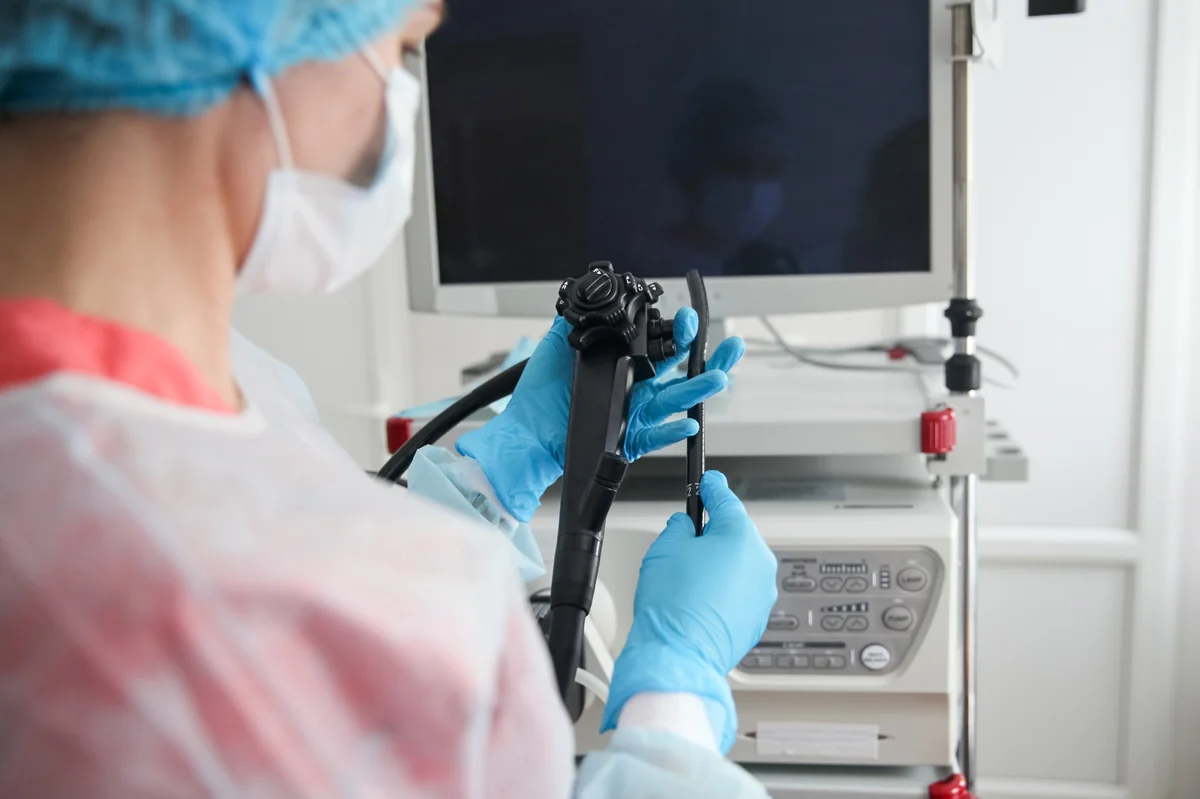
Here’s what usually goes wrong.
The 1/3″ sensor trap. Tons of entry-level rigid endoscope camera systems ship with 1/3″ sensors because they’re cheap and plentiful. Fine for some applications. But if you’re pairing that with a standard 10mm laparoscope (which typically projects an 8-10mm image circle), you’re golden. Pair it with a 5mm scope? Now you’re only illuminating the center third of your sensor. The rest is just… black borders. Your effective resolution drops to maybe 720p even though the spec sheet says 1080p.
And the opposite problem is just as common — I worked with a urology practice last year that bought a camera with a 2/3″ sensor (about 11mm diagonal) for their 4mm cystoscopes. The image circle didn’t even cover half the sensor. They were basically cropping and upscaling in real-time, which introduced all kinds of noise and weird color fringing at the edges.
C-mount to endoscope coupler mismatch. OK so this one’s sneaky. Your camera might have the right sensor size, but if the optical coupler between your C-mount and the scope eyepiece has the wrong magnification factor, you’re either overfilling or underfilling the sensor. I’ve seen 0.5x couplers paired with small sensors (which wastes field of view) and 1.0x couplers on large sensors (which creates vignetting). DaJing and a few other manufacturers publish coupler charts, but most people just guess.
(Pro tip: if you see dark corners on your monitor, you’ve got vignetting. If your image looks zoomed-in compared to what you see through the eyepiece, your coupler’s too strong.)
So here’s my shortcut for rigid endoscope camera systems in laparoscopy ENT and urology: match your sensor diagonal to within 1-2mm of your scope’s image circle, then test with a resolution target before you commit to anything. Takes 10 minutes. Saves you from months of “why does this look muddy?” conversations.
DaJing and Other Manufacturers: Real-World Sensor Size Options for Different Rigid Endoscope Applications
I called DaJing’s U.S. distributor last year because I was tired of guessing which sensor size actually works with a 4mm arthroscope. The rep sent me a compatibility matrix that — honestly — should be printed on every camera head box. Turns out they offer 1/3″, 1/2.8″, 1/2.5″, and 1/1.8″ sensors across their rigid endoscope camera lineup, and each one’s optimized for different scope diameters and surgical specialties.
Here’s what I’ve learned from testing their gear (and a few competitors) in actual OR setups:
| Sensor Size | Best For | Typical Scope Diameter | Common Application |
| 1/3″ (4.8mm diagonal) | Small-bore ENT scopes | 2.7mm – 4mm | Sinus surgery, pediatric bronchoscopy |
| 1/2.8″ (6.5mm diagonal) | Mid-range ENT and urology | 4mm – 7mm | Cystoscopy, nasal endoscopy |
| 1/2.5″ (7.2mm diagonal) | Standard laparoscopy | 5mm – 10mm | Cholecystectomy, appendectomy |
| 1/1.8″ (9mm diagonal) | Large laparoscopes, teaching scopes | 10mm+ | Bariatric surgery, multi-viewer setups |
DaJing’s 1/2.8″ sensor — the one I see most often in urology suites — pairs beautifully with their 0.75x coupler on a standard 7mm cystoscope. No vignetting. No weird cropping. Just clean edge-to-edge image capture.
But here’s the thing nobody mentions in spec sheets: a 1/1.8″ sensor on a rigid endoscope camera for laparoscopy ENT and urology applications will not magically give you better resolution if your scope’s image circle is only 8mm. You’re just capturing empty space outside the useful field. (I made this mistake in 2026 with a high-end 4K camera — looked gorgeous on paper, soft around the edges in practice.)
Other manufacturers like Stryker and Olympus follow similar logic, though they rarely publish sensor diagonals openly. You have to ask. And you should — because a $40,000 camera system that doesn’t match your existing scopes is just an expensive paperweight.
Conclusion
So here’s what actually matters: match your sensor size to your scopes, not to marketing hype. A rigid endoscope camera for laparoscopy ENT and urology is only as good as the glass it’s attached to — and the best 4K sensor in the world won’t fix a mismatch between image circle and capture area.
I’ve watched surgeons get burned by this. They drop serious money on a camera head, plug it into their existing scope tower, and wonder why the image looks soft or vignetted. The spec sheet promised magic. Reality delivered mediocrity.
Ask your rep for the actual sensor diagonal. Test it with your scopes before you sign anything. And if they won’t let you demo it in your OR with your instruments? Walk away.
Frequently Asked Questions
Q: What’s the difference between a rigid endoscope camera for laparoscopy ENT and urology versus flexible scopes?
A: Rigid scopes use a straight optical path with rod lenses — you get way better image quality and light transmission, but zero flexibility. Flexible scopes can bend around corners (critical for some ENT work), but the image bundle degrades resolution. For laparoscopy and most urology cases, rigid wins on clarity every single time.
Q: How much does a decent rigid endoscope camera system actually cost?
A: You’re looking at $25K to $80K for a complete system — camera head, controller, light source, and monitor. The camera head alone runs $8K to $35K depending on whether you want HD or 4K. I’ve seen hospitals cheap out on the light source and regret it immediately.
Q: Can I use the same camera head for laparoscopy, ENT, and urology procedures?
A: Technically yes, but it depends on your scope diameters and couplers. Most rigid endoscope cameras for laparoscopy ENT and urology work across specialties if you have the right C-mount adapters. The bigger issue is sensor size — if your ENT scopes have a smaller image circle than your laparoscopy scopes, you’ll get vignetting or wasted pixels.
Q: Why does my new 4K camera look worse than my old HD system?
A: Sensor mismatch. If you upgraded to a 4K rigid endoscope camera for laparoscopy ENT and urology but didn’t check the sensor diagonal against your scope’s image circle, you’re either cropping the image or capturing dark edges. I watched an OR deal with this for six months before someone finally measured the actual optics.
Q: How often do rigid endoscope cameras need calibration or maintenance?
A: White balance should be done before every case (takes 10 seconds). Full calibration and sensor cleaning? Every 6-12 months depending on case volume. The camera heads themselves are pretty bulletproof — it’s the couplers and light cables that get abused and need replacing annually.
Q: Is 4K worth it for ENT procedures, or is HD good enough?
A: For sinus work and laryngoscopy, honestly? HD is fine for most cases. 4K helps when you’re doing really delicate dissection or teaching residents — the extra detail matters when you’re zoomed in on tiny anatomy. But if your scopes are older or your light source is weak, 4K just magnifies the problems.
Q: What’s the deal with single-chip versus three-chip cameras?
A: Three-chip cameras split light into RGB channels using a prism — you get better color accuracy and sensitivity, but they’re heavier and way more expensive ($40K+). Single-chip rigid endoscope cameras for laparoscopy ENT and urology use a Bayer filter on one sensor and work great for 95% of procedures. Unless you’re doing advanced imaging research, single-chip is the smart buy.