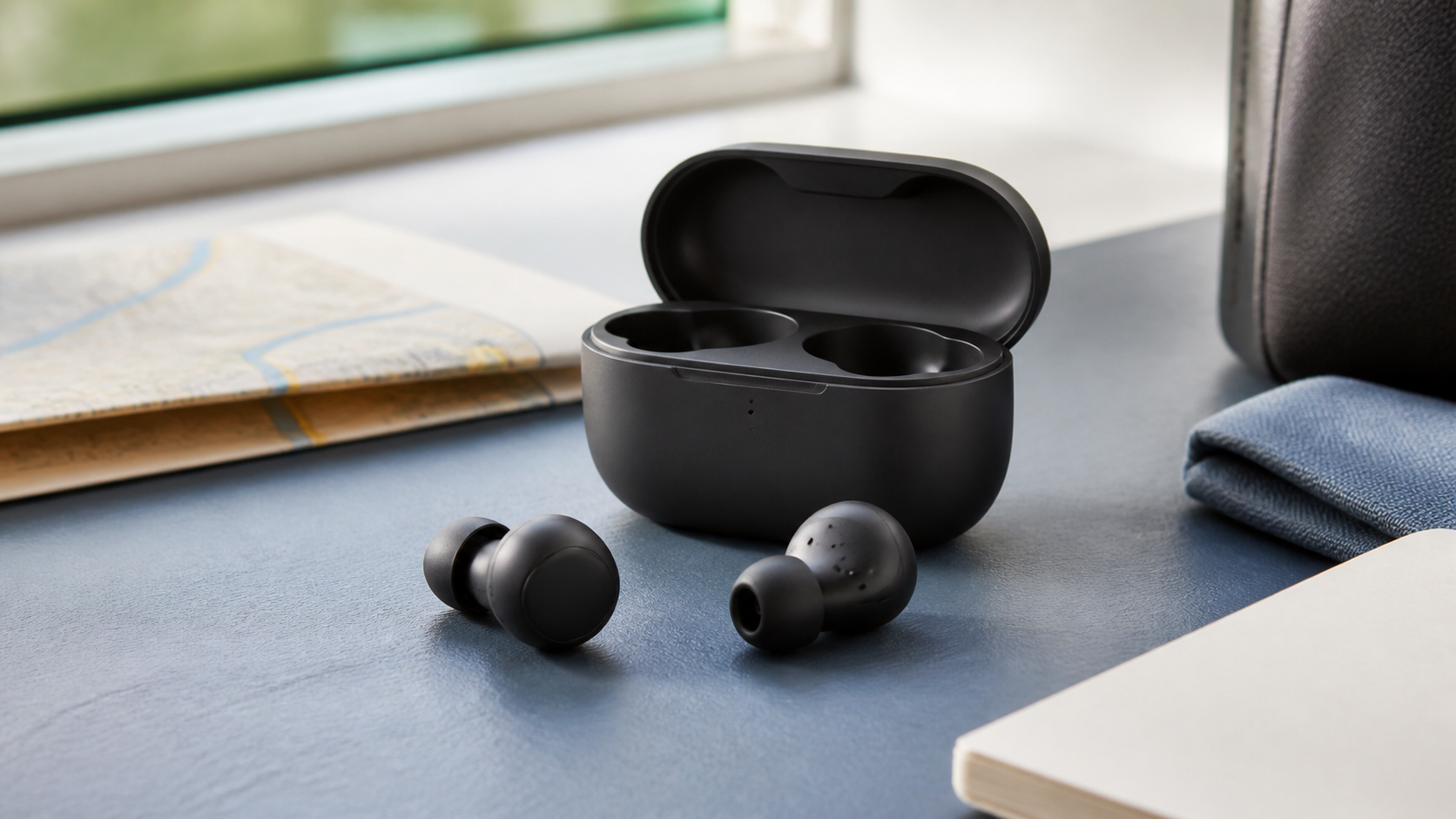
True wireless noise cancelling earbuds promise a quieter commute without cables or full-size earcups. The useful question, however, is not whether a product has “ANC” on the box. It is whether the complete system—ear tips, microphones, processing, speakers, and listening modes—works in the noise you actually encounter.
Quick answer: True wireless ANC earbuds combine a physical seal with microphones and digital processing that produce an opposing sound signal. They usually make steady, low-frequency noise less intrusive, while the ear-tip seal handles much of the higher-frequency sound. Fit, real-world noise, comfort, awareness, and safe volume matter more than a single advertised cancellation number.
What “True Wireless” and “Noise Cancelling” Mean
“True wireless” describes two separate earpieces with no cable between them. Each earbud contains its own speaker, microphones, battery, radio, and processing electronics, while the charging case stores and recharges the pair.
“Noise cancelling” can refer to two different mechanisms. Passive isolation is the physical reduction created by the ear tip and earbud body. Active noise cancellation, or ANC, uses microphones, a control algorithm, and the earbud speaker to reduce part of the remaining sound.
These mechanisms are complementary. Passive isolation does not require electronics, and it can remain effective when the battery is low. ANC is especially useful where passive barriers would otherwise need more bulk to control low frequencies. A 2021 review of active noise control explains that active and passive methods tend to cover different parts of the frequency range rather than replacing one another (Building and Environment, 2021).
How Active Noise Cancellation Works
An ANC earbud runs a rapid control loop:
- A microphone detects environmental noise outside or residual noise near the ear canal.
- The processor estimates the signal needed to oppose that noise at the listener’s ear.
- The speaker plays music and the calculated “anti-noise” together.
- A microphone may monitor the result so the system can keep adjusting.
The popular phrase “equal and opposite wave” is a useful introduction, but it is not the whole engineering story. The controller must account for the microphone response, speaker response, earbud cavity, leakage, processing delay, and the changing acoustics of a moving earbud. Cancellation is therefore local and frequency-dependent, not a force field that deletes every external sound.
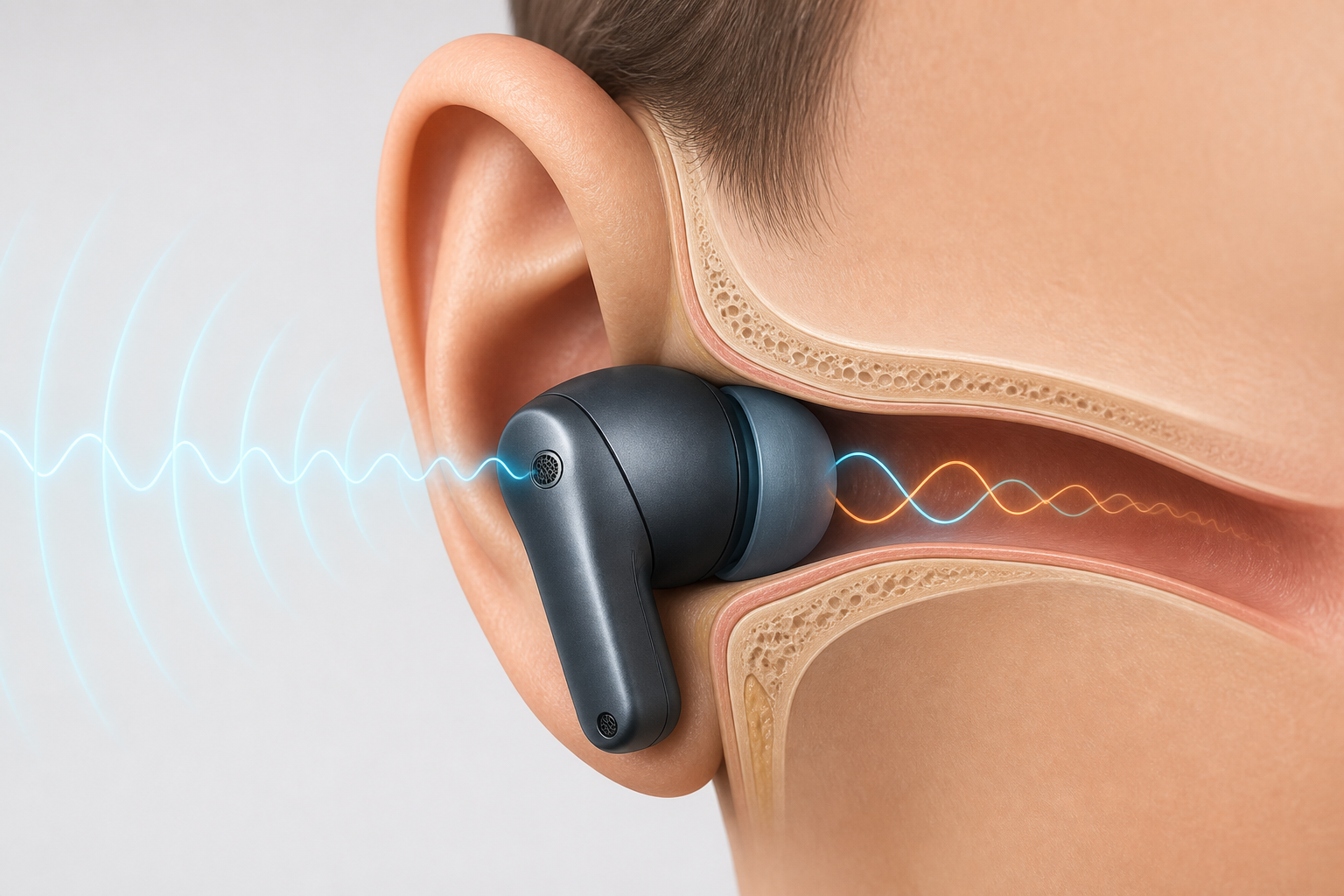
Figure 1. A conceptual view of external sound and an opposing control signal near the ear canal. AI-generated illustration; not to scale and not a measurement diagram.
Feedforward, feedback, and hybrid ANC
Consumer ANC systems are commonly described in three architectures. Research on headphone controllers uses the same classification (Applied Sciences, 2022).
| Architecture | Microphone position | What it can observe | Practical trade-off |
|---|---|---|---|
| Feedforward | Outside the earbud | Noise before it reaches the ear | Gets an early reference but is exposed to wind and fit-related changes |
| Feedback | Inside or near the ear canal | Residual sound close to the listener | Corrects what remains but has less advance information |
| Hybrid | Both positions | External reference plus internal result | Can cover more conditions, but requires careful tuning and more processing |
Architecture alone does not guarantee quality. Treat “hybrid ANC” as a design description, not a score; microphones, fit, algorithms, and tuning still determine the result.
Why ANC Usually Works Best on Steady Low-Frequency Noise
Low, repetitive sounds give the control system a more predictable target. Aircraft cabin rumble, train vibration, bus engine noise, and ventilation hum are common examples. Passive materials are less efficient at low frequencies when space and weight are limited, which is one reason active control is valuable in compact headphones.
Higher-frequency or rapidly changing sounds create a harder timing and spatial problem. Speech, dishes clattering, keyboard clicks, and a nearby horn may become quieter, yet remain clearly recognizable. A real-environment study of ANC headphones found that active performance changed with the noise environment and could deteriorate during highly transient events (Applied Acoustics, 2017).
This leads to a better expectation: ANC reduces the intrusiveness of many sounds; it does not promise silence. If a review says “excellent cancellation” without naming the test noise, frequency range, fit, and measurement method, the claim is incomplete.
Why Ear-Tip Fit Changes the Result
A poor seal creates an acoustic leak. That leak weakens passive isolation, changes low-frequency music response, and alters the path the ANC controller is trying to manage. The same model can therefore sound different in two people—or even in the left and right ears of one person.
Manufacturer guidance consistently treats fit as functional rather than cosmetic. Sony states that an unsuitable tip size or incorrect wearing position can reduce sound quality, noise cancellation, and call performance (Sony Help Guide, 2023). Apple likewise notes that ANC and transparency modes work best with a good fit (Apple Support, 2026).
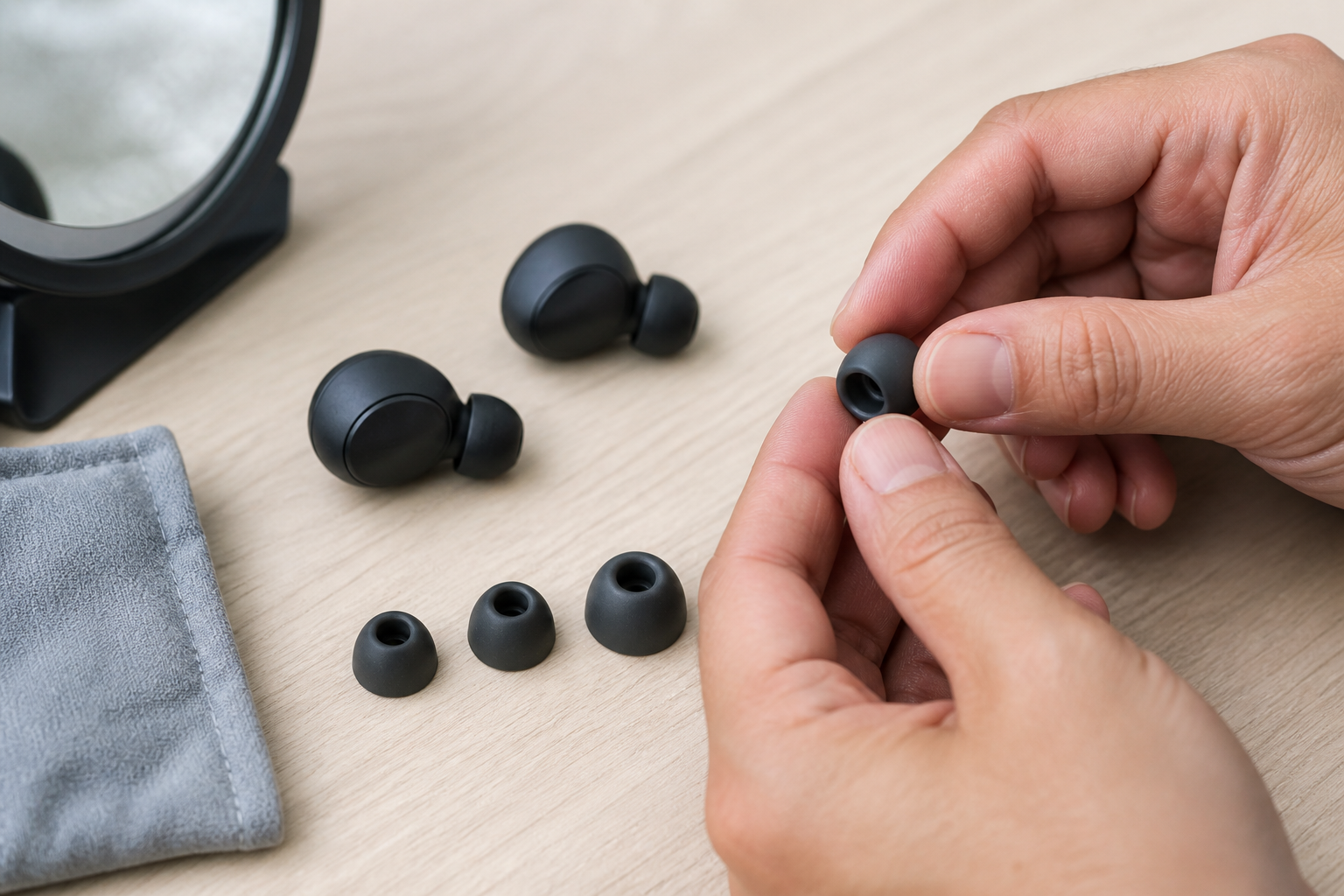
Figure 2. Tip size is part of acoustic performance. The most suitable size may differ between ears.
A simple seal check
Try the supplied tip sizes in a quiet room before comparing ANC modes. Insert each earbud as instructed by its manufacturer, then play familiar audio at a moderate level. Listen for balanced bass, stable imaging, and similar isolation on both sides. Move your jaw and walk around; the seal should remain comfortable and consistent.
Do not choose the largest tip automatically. Pressure, pain, or gradual loosening signals an unsuccessful fit. If no supplied size works, compatible alternative tips may matter more than another app feature.
ANC, Passive Isolation, and Transparency Mode Are Different Tools
Transparency—or hear-through—mode uses microphones and speakers to reproduce some outside sound. It is not simply “ANC in reverse,” and it should not be assumed to reproduce the environment perfectly.
A 2025 objective study tested three true wireless earbuds with ANC and variable hear-through modes. It found a wide range of attenuation and gain behavior, while none of the tested hear-through responses indicated full acoustic transparency (Acta Acustica, 2025). That matters because environmental awareness depends on more than whether voices are audible; spectral balance, direction cues, delay, and level also affect what the listener perceives.
| Situation | Primary need | Best starting mode | What to verify |
|---|---|---|---|
| Aircraft or train cabin | Reduce steady rumble | Good seal plus ANC | Comfort, low-frequency reduction, pressure sensation |
| Café or open office | Reduce hum without losing all context | Moderate ANC or adaptive mode | Speech remains manageable when needed |
| Walking near traffic | Maintain awareness | Transparency or remove an earbud where safe | Vehicles and announcements are clearly detectable |
| Quiet room | Minimal processing | ANC off or a low setting | Noise floor, tonal changes, and battery use |
| Noisy workplace | Certified protection | Approved hearing protector | Required rating, fit test, and workplace rules |
How to Evaluate True Wireless Noise Cancelling Earbuds Intelligently
Specifications rarely capture the experience. Use four repeatable tests instead.
1. Test the seal before the algorithm
Compare tip sizes with ANC off. If bass disappears when you gently reposition an earbud, the seal is unstable. Resolve that first; otherwise, an ANC comparison mixes two variables.
2. Use more than one noise type
Try a steady fan or transit rumble, conversational speech, and brief household sounds. Keep the playback volume constant. The aim is not to find a dramatic demo, but to learn what the system reduces, what it leaves recognizable, and whether it adds artifacts.
3. Switch modes during the same passage
Compare ANC, off, and transparency without changing tracks or volume. Listen for bass balance, vocal position, hiss, pumping, or a “blocked ear” sensation. A useful design should remain listenable, not merely produce the biggest first-second contrast.
4. Repeat the test while moving
Walk, turn your head, move your jaw, and briefly test in light outdoor air. Fit may change and external microphones can react to wind. Repeatability is more valuable than one ideal seated result.
Record the outcome as a small matrix rather than “good” or “bad”:
| Test | Pass question | Warning sign |
|---|---|---|
| Seal | Is bass and isolation stable in both ears? | One side changes with small movement |
| Steady noise | Does rumble become less intrusive? | Little change despite a confirmed seal |
| Transient noise | Are expectations realistic and artifacts limited? | Pumping, sharp amplification, or instability |
| Transparency | Can important surroundings be understood naturally enough? | Delay, excessive gain, or confusing direction cues |
| Comfort | Can you wear them for the intended session? | Pain, pressure, slipping, or skin irritation |
Features That Matter After Core Acoustic Performance
Once fit and cancellation are acceptable, consider controls, battery behavior, call quality, water-resistance claims, platform compatibility, repair options, and replacement-tip availability. Verify claims for the exact model and region. Prioritize the use case: commuters need stable fit and predictable awareness controls, while desk listeners may value low self-noise and comfort.
Safe Listening and Awareness
Noise cancellation can make lower playback levels feel sufficient in noisy places, but ANC itself does not make loud music safe. The World Health Organization says listening risk depends on sound level, duration, and frequency of exposure. Its current safe-listening guidance gives 80 dB for up to 40 hours per week and 90 dB for four hours per week, while recommending well-fitted noise-cancelling headphones to reduce the urge to raise volume (WHO, 2026).
Consumer ANC earbuds are also not automatically hearing protection for hazardous work. NIOSH states that headphones or earbuds with active cancellation should not be treated as hearing protection unless they carry an appropriate Noise Reduction Rating (CDC/NIOSH). Follow workplace requirements and use certified protectors where required.
Finally, choose awareness over isolation around roads, platforms, machinery, and other hazards. Transparency mode is an aid, not proof that every warning sound will be reproduced accurately. If the situation demands full attention, pause playback or remove the earbuds.
Common Mistakes
- Judging ANC before fixing fit: A leak can make a capable system seem weak. Test tips first.
- Using only an engine-noise demo: Repetitive low-frequency audio flatters ANC. Add speech and transient sounds.
- Treating transparency as natural hearing: Microphone processing can change level, timing, and tone.
- Raising volume because the background feels quieter: Reduced ambient noise does not reduce the sound produced inside the earbud.
- Using consumer earbuds as industrial protection: ANC branding is not a substitute for a certified hearing protector.
FAQ
Do true wireless noise cancelling earbuds block all sound?
No. They combine passive isolation with active control, and their effectiveness varies by frequency, noise type, fit, movement, and design. Steady low-frequency noise is often the easiest target. Speech and sudden sounds may be reduced but still remain intelligible or noticeable.
Is hybrid ANC always better?
Not automatically. Hybrid systems use both external and internal microphone information, but implementation matters. Microphone quality, tuning, stability, processing delay, speaker capability, and the ear-tip seal can outweigh the architecture label.
Why does one ear cancel noise better than the other?
The most common first check is fit. Ear canals are not perfectly symmetrical, so each side may need a different tip size or insertion angle. Clean the tips and microphone openings according to the manufacturer’s instructions, then retest. Persistent imbalance may require support or a hearing check.
Can ANC protect hearing?
It may help you avoid turning music up in noisy settings, which supports safer listening behavior. It does not make unlimited volume or duration safe, and ordinary ANC earbuds are not certified workplace hearing protection unless specifically rated as such.
Should I use ANC or transparency mode outdoors?
Use the mode that preserves enough awareness for the environment. Near traffic, crossings, platforms, or machinery, do not rely solely on processed transparency. Lower the volume, pause playback, or remove the earbuds whenever full attention is necessary.
Conclusion
True wireless noise cancelling earbuds are compact acoustic systems, not checkbox features. Passive seal and active control solve different parts of the problem. Test fit first, compare several real noise types, check transparency and comfort, and keep listening exposure within sensible limits.
Continue learning: Build the site’s headphone-science cluster next with a fit-and-seal test guide, then connect it to a safe-listening guide. Those pages will create a useful reader path without turning this explanation into a product list.